Showing posts with label Movies. Show all posts

Friday, July 31, 2009

New York, I Love You

There is nothing in this world that I love more than movies. I did, after all, devote four years of study to the crafting, telling, and analysis of the medium. There's something so great about film - it taps into telling stories and delving into the human condition, belly-first. But, if there was ever a contender for things I love more than movies, it might just be New York.

Enter "New York, I Love You," the perfect hybrid of motion picture and the Big Apple.

It's like Christmas when I first discovered they're making a companion film to 2006's Cannes Film Festival darling, "Paris, Je T'aime," appropriately titled "New York, I Love You." The premise is simple: each five minute vignette is about a specific part of New York - the Upper East Side, Bronx, East Village, and so on. And each vignette is written and directed by a prominent director.
It just so happens to be the directorial debut of Natalie Portman, who appeared in a "Paris, Je T'aime" vignette.

Emmanuel Benbihy, the architect and ingenue of these love letters to various cities, is also planning "Shanghai, I Love You," slated for release in 2010. And though "NY, ILY" won't be out until October, there's still plenty to love about this film - it boasts all-star cast, from Robin Wright Penn, Orlando Bloom, and Andy Garcia (it angers me that Blake Lively is in it, though she is a part of New York, if only fictitiously.)

Does this mean "Cleveland, I Tolerate You" is in the works? Doubtful. But who knows, the wanderlusting writers of "Paris, Je T'aime" might have started a vast empire.

Tuesday, July 14, 2009

Half Blood Wince

It has finally arrived. The torturous weeks walking through New York viewing pictures of a very macabre Daniel Radcliffe in subway stations are at an end. For any Muggles who have been like Sirius Black, and living in a cave for the past decade, I am, of course, referring to the debut of Harry Potter and the Half Blood Prince this evening.

Prepare for a masterful tale of spells and villains, of castles and creatures, and a lot of wizard angst. Review to follow after my viewing. To Hogwarts! To Harry!


Well. That was that. I braved the lines at the Regal Cinema in Union Square, and precisely at 12:01, was the magical moment. Viewers clapped and cheered as though they were at a Quiddich match between Slytherin and Gryffindor. But enough about my irrefutable nerdiness.

Let's start out with the good the film has to offer. No director seems to stay around very long - one could even argue that the position is cursed, much like the Defense Against the Dark Arts position. But, in the whole mess of them, David Yates (of several acclaimed BBC series) has proven he can handle the epic span of storylines that J.K. Rowling presents. He transformed "Order of the Phoenix" from an angst-ridden teenybopper (cough, cough...Twilight) popcorn flick to a Big Brother-esque lesson on totalitarianism and absolute power. And to that end, Yates has made a successful, visually stunning film with HBP.

The issues lie in several aimless plot twists screenwriter Steve Kloves threw in. Too much butterbeer at the Hog's Head, perhaps? Or not enough Felix Felicis? I am not the first, nor will I be the last, to complain about the completely irrelevant scene in the middle of the film, where the Burrow is stormed by Bellatrix LeStrange (Helena Bonham Carter, in a disappointing role handled with the finesse of Gwarp in a chinashop) and the pointless were-man Fenrir Greyback (Dave Legeno). I realize that movies usually deviate from their heftier cousins, the novel, but to spend over five minutes on a battle that was not in the book, did not further the plot, and took the place of the skirmish at the end of HBP?

A definite plus to nearly a decade of witchcraft and wizardry and wee little Brits is that they were bound to get better at some point -- Emma Watson, especially. She has always been the strongest actor of the three, no more than in the third film where she proved she was more than a brainy poindexter, and a deep, emotional being with as much insight into Muggle Studies as she does wizard romance. We see her and Won-wo--I mean, Ron's love blossom, from denial to the touching scene in the Hospital Wing where Ron mumbles "Erm-on-knee."

Another performance to be applauded? How about the creepy little nephew of the scary serpent-like Dark Lord Ralph Fiennes, Hero Fiennes-Tiffin. Finnes-Tiffin plays the intensely creepy 11-year-old Tom Riddle cum Lord Voldemort. Thankfully, though, he hasn't developed his odd penchant to play with anagrams like in Chamber of Secrets.

The film's peaks do not make up for its valleys, and vice versa. Though the climax at Voldemort's cave is, at points poignant and touching, when Dumbledore offers himself as the potion drinker, telling Harry, "You're too important." Harry, of course, plays the hero, helping the wizened old Michael Gambon (who never quite captures the sparkle of Richard Harris' Dumbledore) escape to safety. [SPOILER ALERT] Yet minutes later, on the highest tower of Hogwarts, Harry watches blithely by as Dumbledore is murdered by Snape, another plot point that isn't consistent with the characters. In the novel, Dumbledore has the choice to defend himself or perform a bodybind spell on Harry to keep him safe and unseen under the Invisibility cloak. He choses to protect Harry, knowing that one way or another, he was to be sacrificed for the cause of good and light.

The movie, as a whole, is consistent with every other, in that every film has consistently disappointed and strayed away from the crucial plot points. Yes, the films are visually stunning, like a Fabergé egg but upon any amount of pressure or scrutiny, one finds it hollow, and it cracks and crumbles upon itself. Nowhere in the film does Kloves mention the Gaunts, Tom Riddle's only pure-blood wizard relatives; likewise, he only spends a pittance of time with the Horcruxes. Or the lessons with Dumbledore. Or Snape assisting Malfoy in his all-important mission for the Dark Lord. The film spends so much time proudly flaunting how great it is to be a wizard and no time explaining why things are happening.

Kloves should examine the methods of the Academy Award winning writers of the Lord of the Rings trilogy - Fran Walsh, Philippa Boyens and Mr. Peter Jackson himself. The three knew the texts religiously, had read and love the books for years before carefully adapting it to the silver screen. Any changes were made for a reason, to adapt the characters to the deceptively tricky medium of film. Boyens once commented on changing the character of Faramir in The Two Towers:

If you're trying to up the tension, you don't have your main characters captured by someone who sort of interrogates them, but, not really, who then offers them a cup of tea and says, 'I'll do anything I can to help you.' It's death on film. And it's not just the effect that the character out of the book...it's trying to establish that this is the most evil thing ever created, it's tearing apart the mind of your main character, it's reduced this other character to this miserable creature Gollum, and now you come along someone who says, 'I would not touch this thing if it lay on the highway.' You've just stripped the Ring of all its power.

The issue is apparent for avid readers of Rowling's series: it is obvious Kloves has no love of the text he is transforming, it is merely another assignment, another job. Much of the joy and mystery felt from reading the books was lost to me, as it felt like an itenerary for much of the film: "Go here, do this, say that, cast a spell or two, Quiddich match, someone dies, Hogwarts Express."

Bethertainment Weekly Grade:
Harry Potter and the Half-Blood Prince - starts out wholley splendid, and half-heartedly fizzles out. B-

Harry Potter quote of the day: "He's covered in blood again. Why is it he's always covered in blood?"

Sunday, November 30, 2008

Little (Economic) Drop of Horrors

Apologies for the serious lapse in updating, dear reader(s). However, with the constant call of a 9-6, the demands of living in New York City, and general negligence on my part, I have failed to update Bethertainment Weekly by its' promised calendric measures of time.

America is melting. It is a giant mushroom cloud of stale credit, foreclosures, and vaporized 401K's. Wall Street has transformed into a leviathan bowl of Jell-O in which financial brokers flail, wearing those little orange floaties and go down with the proverbial ship as the orchestra plays "Nearer to Thee." Leonardo diCaprio can be found whispering endearing words to the Kate Winslet's of the world; Frodo can be found wandering the streets looking for Mount Doom.

So, what's a body to do when there is little to celebrate, little funding to attend keystone cultural films such as Nights in Rodanthe and Twilight, where teeny-bopper vamps run around in the forest making doe-eyes at each other? Why, very little, of course. But American film has done much of the same. Taken hard times, made them a little less hard. Or just added cushiony fluff to pad the fall. Such economic destitution call for one of two things: one, a lot of comfort in the form of alcoholic beverages. Two: films to make the general populous forget that they might be begging for spare change on Delancy St. next week. So, here are five films that either embrace or deny the need for the god of green, the root of all evil, and, the unobtainable.

1. Golddiggers of 1933 (1933)
What better way to celebrate monetary prosperity and the end of Herbert Hoover's asinine presidential rule? By celebrating capitalism, of course! With show tunes! And Pig Latin! In Mervyn LeRoy's musical romp, veteran showgirl Trixie Lorraine (Aline MacMahon) and her roommates are simply drowning in debt. The bright lights of Broadway have lost some of their gleam, and no production can seem to last past rehearsal. There's just no money. Until, of course, the dapper Warren William (J. Lawrence Bradford) saves the angry producer (Ned Sparks) from an embolism by writing a winning show, and magically funding it. The story is pure fluff-sugar and spice and everything with a price-there's socioeconomic wars between William's family when his older brother finds out Warren is courting a Broadway showgirl. Or that he's using his trust fund to support the frivolous "Gold diggers."

In the end, you have a feel-good lavish production that uses appoggiatura and bobbed hair to coat the economic horrors of the Great Depression. Which could be why the studio adds a politically charged number to the end of the film, "My Forgotten Man," a mournful ballad about the faceless thousands still stuck in breadlines, still scarred from war. A true show stopper.

2. Marie Antoinette (2006)
Ten minutes watching Sophia Coppola's brazen rock'n roll rendition of the lavishly opulent French monarch will make you want to eat cake in Versailles, too. Although it was greeted with less than stellar acclaim, Coppola's artistic ambition is worth its weight in gold. You know the story.

Self-involved teenage queen forced to marry young, produce an heir, discovers the pleasures of carnal affection. Though chocabloc full of anachronisms (see: a pair of blue Converse All-Star's in Marie's dressing room), it's a fantastic mix of wealth and waste. Not to mention, several dozen pairs of custom-made Manolo Blahniks.

3. Little Shop of Horrors (1986)
Ever want to get rich quick? Try stumbling across a curious plant in Chinatown after a total eclipse of the sun, bring it back to your failing floral business, and see where that takes you. The only snag is, the plant doesn't have a taste for Miracle Grow: the only fodder it fancies is the kind with platelettes and leukocytes - yes, folks - blood. Such is the woeful tale of Seymour Krelborn (Rick Morranis), a down-and-out orphan who was taken in by the surly florist, Mr. Mushnick (Vincent Gardenia).

Turns out, this bloodthirsty plant, christened the Audrey II after Morranis' love interest (the wonderful Ellen Greene), is more than he barganed for. Morranis nurses the fledgeling plant as much as he can, literally giving his lifeblood for the sake of the plant that's bringing so much publicity to the small florist. So, Seymour is bloodless and spineless, letting Audrey slip through his awkward finger to the clutches of the maniacal dentist, Dr. Orin Scrivello, DDS (Steve Martin). Audrey II needs blood: Seymour needs Audry I: Dr. Orin Scrivello, DDS is full of blood. You see where I'm headed?

One may argue this little gem of a musical is not specifically about economic crisis. But it's about slumming it, finding a way, and has a nifty paralell to the consequences of unbridled addiction. What's not to love?

So tighten your belt, dig out your library card, and rent away, these movies that make you feel wealthy...at least, in the intellectual sense.

Quote of the Day: Seymour: The Audry II isn't a healthy girl.
Mr. Mushnik: Strictly between us, neither is the Audrey I.

Tuesday, November 4, 2008

I Wished I Looked as Smoldering and Pensive in Eye Makeup as Edward Cullan

I'm not one to hate on vampires. They've been through a lot these past thousand years. The whole condemned to darkness, eternal damnation thing seems like it might be difficult - even more difficult than waiting for the next season of "Mad Men." And I love shows like "Buffy the Vampire Slayer," and mildly tolerate "Angel." Underworld was pretty baller, too. But seems like everyone's been bitten nowadays with something I like to call the "VampStamp." That is to say, latching on to a trend that was popular nearly a decade ago, and approaching it with as much creativity and insight as Sarah Palin does with foreign policy.

Case in point: Twilight. I, of all people, am not immune to pop culture phenomena: the Harry Potter series, "Gossip Girl," gaucho pants, and blue eyeshadow. But this is where I draw the line. I justify The Boy Who Lived with intellectual excuse: J.K. Rowling may be a literary magpie, a wordsmith of wile, but she begs, borrows, and steals from credible places. Hidden within all of the expecto millions and marketability, Rowling cleverly embeds references to classical Greek mythology, Celtic legend, and enough pathos and humor to keep the reader interested.
You're, like, totally hotter than my last girlfriend, Buffy.


As a social experiment, I decided to find out what all the fuss was about with the Twilight series. And so, I swallowed my pride as I marched in to Barnes & Noble and marched out with a shiny new copy of Twilight. On the subway ride back to my flat, I read the first chapter. "First Sight." Alright, I said to myself. This could be promising, in a sort of YA-bit-of-guilty-pleasure-to-hide-under-the-bed-when-English-major-friends-come-to-visit way. Like a cookie. Sinfully indulgent. But, as I sat on the L train and read the first few words, ("My mother drove me to the airport...it was 75 degrees in Phoenix...the sky was blue...") I cringed. This was everything - EVERYTHING - I fought so savagely against in my college workshops. Unimaginative, dull, poor writing.

It's every story I have heard before. The estranged and awkward (but appropriately pretty) new girl, Bella, has moved from her warm roots of Phoenix for upstate Washington to live with her father. (Fly Away Home, anyone?) Her new school is unfamiliar and bizarre. She seems out of place, though she manages to find friends to sit with at lunch. She asks one of the girls, Jennifer, about those five svelte hotties with the alabaster skin sitting all alone at a table in the corner. "That's Edward. He's gorgeous!" Jennifer says. Bella and Edward Cullan lock eyes. We know where this is going.

I could not make it past the first chapter. Call me closed-minded, call me a vampire-hating fishmonger, but when books are that obvious, there's little point. Please, humor me, and let me make my educated guesses:

Bella and Edward find they have much in common - mostly, their ridiculous good looks and incredible glow-in-the-dark pallor. Neither of them say much, because when you're that hot, what's the use? Oh, except he's a vampire and wants to suck the lifeblood out of her. Brilliant. Where have we seen this before? Not Joss Whedon's ingenuous "Buffy the Vampire Slayer," no? Of course, there is trouble in paradise, and something keeps Edward and Bella from being together. Insert a dark character shrouded in evil mystery. There's probably a kidnapping, a near-death scare, and a prom thrown in there somewhere.

Maybe I'm as off base as snow in Phoenix. But, maybe not. Does that mean that I'll boycott the film? Probably not. It is my patriotic duty to screen and suggest to you, loyal readers, what is quality and what is not.

Now, if you'll excuse me, I'm off to avoid the sun and try and seduce a mysterious man with a pallid complexion.

Quote of the Day: "He's gorgeous!"

Friday, July 18, 2008

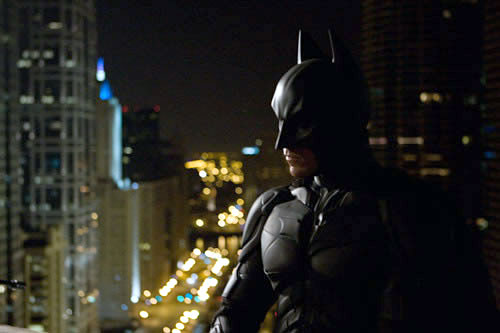
A Bright Day for the Dark Knight


There is a disconnect between Hollywood today and the Hollywood of thirty years ago. Back then, the blockbusters were the award crusaders - films such as Star Wars and Jaws weren't simply summer popcorn fodder, but films that promoted change, entertained, the whole nine yards. Heck. One of those franchises even inspired its own religion. And it doesn't worship giant demonic fish. It would seem that Christopher Nolen found a time machine - because The Dark Knight supremely delivers both.

Over a brooding Gotham City skyline, the dark hero watches a city that has restored to fear and doubt. A lot of sundry men in Joker masks attempt to rob a bank. One by one, they are weeded out by another of their heist group. "You're not needed anymore," they say. "One less share." Only when The Joker enters does the audience see that he is a One Man Act, and that his idea of making writing utensils to disappear is to hide them in men's craniums. Heath Ledger's Joker is not Jack Nicholson's. Ruthless, disturbed, and - oh yes - criminally insane, he makes the average viewer squirm uncomfortably. Are his deeds and actions funny? Certainly not. But seeing a grown man in demonic clown paint and a nurses' uniform brings up a plethora of emotions. And he has this ... thing ... with making sure his victims suffer. "It brings out their true character," says The Joker. Posthumous Oscar nods, anyone?

The film is covered by its overwhelming sense of darkness and doubt. Harvey Dent (Aaron Eckhart) serves as the Beacon of Light in a city where no one knows who will be the next target, the next victim to Drug Lords or Psychosomatic Clowns Gone Awry. Christian Bale's dutiful Batman shines like a ray from the Batlight; the recasting of Maggie Gyllanhaal over Katie Holmes as Rachel Dawes is like Batman choosing his newer, lighter titanium Batsuit. Nowhere in the film are the kitschy references to a comic book, tight spandex costumes, or villains that can be defeated or understood. The Joker uses Gotham as his urban playground, where hubris and human nature collide.

And what of the brooding Batman himself? The guy goes around the entire time playing hero only to realize that Gotham needs someone to look up to, and another to collaborate against, and despise. Guess who's not the White Knight on the shining stallion? It's okay, though, Bat Boy can take the heat.

Seems like there's been some time-travel going on back to the days where Blockbusters are both satisfying and substantial. Go Hollywood. Looks like you've seen the distress signal in the night sky.

Bethertainment Weekly Grade: A
A solid, brooding film that kicks Bat Butt.

Quote of the Day: Harvey Dent: You either die a hero or you live long enough to see yourself become the villain.

Tuesday, June 24, 2008

The Dog Days of Summer

Some people tend to be partial to summer. No school, lazy days spent by the pool, no worries. But - of course - that also means no new shows. Yes, as the month of May wanes, so too does the quality of entertainment. Gone are the hopeful Oscar contenders, the art films, and even Blockbusters. In their place are crude facsimiles, usually to do with some talking rodent or a grown man in neon tights. Oh, and lots of explosions and things that go...

BANG!

WHIZ!

BIFF!

No new shows, alas. I am lost without "LOST," I want to be pushing up daisies with no "Pushing Daisies," I'm going mad without "Mad Men." (I won't tell you what activities the lack of "Weeds" encourages). Yes, there are the redemptive media apostles, Jon Stewart and Stephen Colbert - but the world needs more. More than pundit jokes about current events. More than clever taglines and theme music. But ... how? September seems like some sort of unobtainable Grail, an Elysium of plot and character development. Have faith, O ye with anxious eyes and worn sofas.

There is hope.

Here are several ways to hold on:

1. Revisit Old Favorites
What was that one thing that Michael Scott said to Dwight that was just so inappropriate? Or a steamy love scene featuring Jonathon Rhys-Myers? Thanks to modern technology, DVD's allow it. So figure out the mysteries of LOST, find out what made Betty ugly, and see if saving the cheerleader really does mean saving the world. (I'd argue, save the Nielson, save the show, but that's why I'm not an important television executive).

2. Discover Something New (That Might be Old)
There are a wealth of films and television shows that simply go under the radar. Find movies that were nominated for an Oscar but didn't win (some of them simply get the shaft when they are, in fact, the better film) and be amazed. Or, discover the beauty of television gems of yesteryear - "Boomtown," "Freaks and Geeks," and of course - the short-lived but epically entertaining "Cop Rock."

3. Do Something Old-Fashioned
Books. Ever heard of them? Sometimes they're in the pockets of DVD's and explain special features. They are heftier versions of scripts and screenplays. And some of them are pretty entertaining. And then there's hoop-twirling, four-square, and flashlight tag, for starters. For the more advanced, there are regattas, parades, poodle grooming, and French lessons. Très amusant, non?


Be strong. Please, do it for the television.
September will be here before we know it.

Quote of the Day: "Are you blue?"
"Only in color, Michael."

Thursday, June 12, 2008

Books versus Film: A Case Study of "Atonement"

At the Oscars, in the category of best picture, there are two distinctions: Best picture from material previously published or produced, and best original screenplay.

But where do they get the material for that?

Aliens?
Divine inspiration?
Woody Allen?

Short stories, yes. Paintings. Songs. All of those. But - the most obvious (and the most ambitious) is certainly the novel. The superlative Sistine Chapel of writing endeavors. Ian McEwan's epic novel, Atonement, is grandiose in a much subtler way than the film. Though each are confined on a simple medium (paper and plastic, respectively), they are both epics, without refute. McEwan takes luxury and delight in the most intricate of descriptions. In the scene by the fountain and the breaking of the vase, we find out why it is the most expensive possession of the Tallis family - that Mr. Tallis' brother fought in World War One, found it from a destroyed museum, and died a few weeks before armistice. Rich details like these are simply not practical for the medium of film.

At variance, director Joe Wright's already legendary five-minute tracking shot from Dunkirk is an impossibility to paint in prose. That is, the effect would be lost. From the chaos of shooting wounded horses, to drunken soldiers riding a carousel in celebration, to the scale of 3,000 men on a beach in France - gives the viewer the most accurate portrayal that one can hope to achieve (barring virtual reality and actually being there, of course). We see what the jaded, war-weary Robbie Turner does, experience what he does, feels his struggle through pictures, not words.

So which medium is better? Can it be phrased in such simplistic terms? Or does each have its own particular merits?

Yes.

Quote of the Day: "The cost of obvious daydreaming was always the moment of return, the realignment with what had been before and now seemed a little worse. Her reverie, once rich in plausible details, had become a passing silliness before the hard mass of the actual. It was difficult to come back."
Atonement, Chapter Seven

Tuesday, May 27, 2008

A Flurry of Films

This weekend was one of elevated intellect, elevated insight, and elevated blood pressure.

The first two are owed in part to the vast amount of films I watched. The last has to do with the $4.03 I paid per gallon of gas, as well as the promise of seven years indentured servitude and my firstborn child.

America’s national holidays let me savor time that I wouldn't have had originally, and provide a cathartic release to watch all of the films I’ve wanted to watch over the past few years but have made excuse - you know. "Oh, I can't, not tonight, A Shot of Love with Tela Tequila is on ... is she straight? Is she bi? Is she greedy and attention-seeking?" "Not tonight, I have a headache," "..." and so on and so forth. But with little excuse, barring my iTunes library is already too full, I decided, with no time like the present, that this was the weekend to catch up.

I have a friend who won't watch the Oscars unless she has watched all films nominated that year. At least for best picture. I’m not sure how she feels about Foley editing or best-set intern - I’m just talking about the majors.

I’ll start with the one I saw last: there will be blood.

Daniel Day-Lewis plays (incredibly, I might add) the hardened, articulate oil tycoon Daniel Plainview, a man bent on striking deals and finding as much black gold as possible. He claims to be a family man, caring for his prepubescent son, H.W. (whom he adopted, an orphan child of one of his dead workers).

The film follows several decades of Plainview’s life, from humble beginnings in the 1890's where he digs for silver but finds black gold, all the way until the 1920's, where Plainview has evolved, gone to seed, and the years seem to be catching up on him. The humble, concise Paul Sunday (Paul Dano, who plays the identical twin Eli as well) once approaches Plainview in the late 1890's about his family's goat farm, where he believes there is a lucrative market for oil drilling. And thus begins the transformation of the sleepy town of little Boston from religious bastion to industrial behemoth.

The clarity in which Paul Thomas Anderson writes and directs makes this film an instant classic. And let's not talk about DDL - who listened to old turn-of-the-century recordings to adapt the speech patterns of men of the time. And his mustache? Day-Lewis means business. Oil business.

In this sleepy Texas town (which was coincidentally filmed right next to its Oscar contender, no country for old men) we find less of what life is like in 20th century oil country and more of the evolution - or regression - of a man. Plainview reveals to his brother, "I have a competition in me. I want no one else to succeed. I hate most people." you don't get a plainer view on Plainview than that.

I drink your milkshake.

Watch this movie. Now. Or there will be blood.

Tomorrow: If you're lucky (or if I’m up to it) an in-depth review of the season finale of LOST.

Quote of the day: "I drink your milkshake."