Showing posts with label Review. Show all posts

Tuesday, July 14, 2009

Half Blood Wince

It has finally arrived. The torturous weeks walking through New York viewing pictures of a very macabre Daniel Radcliffe in subway stations are at an end. For any Muggles who have been like Sirius Black, and living in a cave for the past decade, I am, of course, referring to the debut of Harry Potter and the Half Blood Prince this evening.

Prepare for a masterful tale of spells and villains, of castles and creatures, and a lot of wizard angst. Review to follow after my viewing. To Hogwarts! To Harry!


Well. That was that. I braved the lines at the Regal Cinema in Union Square, and precisely at 12:01, was the magical moment. Viewers clapped and cheered as though they were at a Quiddich match between Slytherin and Gryffindor. But enough about my irrefutable nerdiness.

Let's start out with the good the film has to offer. No director seems to stay around very long - one could even argue that the position is cursed, much like the Defense Against the Dark Arts position. But, in the whole mess of them, David Yates (of several acclaimed BBC series) has proven he can handle the epic span of storylines that J.K. Rowling presents. He transformed "Order of the Phoenix" from an angst-ridden teenybopper (cough, cough...Twilight) popcorn flick to a Big Brother-esque lesson on totalitarianism and absolute power. And to that end, Yates has made a successful, visually stunning film with HBP.

The issues lie in several aimless plot twists screenwriter Steve Kloves threw in. Too much butterbeer at the Hog's Head, perhaps? Or not enough Felix Felicis? I am not the first, nor will I be the last, to complain about the completely irrelevant scene in the middle of the film, where the Burrow is stormed by Bellatrix LeStrange (Helena Bonham Carter, in a disappointing role handled with the finesse of Gwarp in a chinashop) and the pointless were-man Fenrir Greyback (Dave Legeno). I realize that movies usually deviate from their heftier cousins, the novel, but to spend over five minutes on a battle that was not in the book, did not further the plot, and took the place of the skirmish at the end of HBP?

A definite plus to nearly a decade of witchcraft and wizardry and wee little Brits is that they were bound to get better at some point -- Emma Watson, especially. She has always been the strongest actor of the three, no more than in the third film where she proved she was more than a brainy poindexter, and a deep, emotional being with as much insight into Muggle Studies as she does wizard romance. We see her and Won-wo--I mean, Ron's love blossom, from denial to the touching scene in the Hospital Wing where Ron mumbles "Erm-on-knee."

Another performance to be applauded? How about the creepy little nephew of the scary serpent-like Dark Lord Ralph Fiennes, Hero Fiennes-Tiffin. Finnes-Tiffin plays the intensely creepy 11-year-old Tom Riddle cum Lord Voldemort. Thankfully, though, he hasn't developed his odd penchant to play with anagrams like in Chamber of Secrets.

The film's peaks do not make up for its valleys, and vice versa. Though the climax at Voldemort's cave is, at points poignant and touching, when Dumbledore offers himself as the potion drinker, telling Harry, "You're too important." Harry, of course, plays the hero, helping the wizened old Michael Gambon (who never quite captures the sparkle of Richard Harris' Dumbledore) escape to safety. [SPOILER ALERT] Yet minutes later, on the highest tower of Hogwarts, Harry watches blithely by as Dumbledore is murdered by Snape, another plot point that isn't consistent with the characters. In the novel, Dumbledore has the choice to defend himself or perform a bodybind spell on Harry to keep him safe and unseen under the Invisibility cloak. He choses to protect Harry, knowing that one way or another, he was to be sacrificed for the cause of good and light.

The movie, as a whole, is consistent with every other, in that every film has consistently disappointed and strayed away from the crucial plot points. Yes, the films are visually stunning, like a Fabergé egg but upon any amount of pressure or scrutiny, one finds it hollow, and it cracks and crumbles upon itself. Nowhere in the film does Kloves mention the Gaunts, Tom Riddle's only pure-blood wizard relatives; likewise, he only spends a pittance of time with the Horcruxes. Or the lessons with Dumbledore. Or Snape assisting Malfoy in his all-important mission for the Dark Lord. The film spends so much time proudly flaunting how great it is to be a wizard and no time explaining why things are happening.

Kloves should examine the methods of the Academy Award winning writers of the Lord of the Rings trilogy - Fran Walsh, Philippa Boyens and Mr. Peter Jackson himself. The three knew the texts religiously, had read and love the books for years before carefully adapting it to the silver screen. Any changes were made for a reason, to adapt the characters to the deceptively tricky medium of film. Boyens once commented on changing the character of Faramir in The Two Towers:

If you're trying to up the tension, you don't have your main characters captured by someone who sort of interrogates them, but, not really, who then offers them a cup of tea and says, 'I'll do anything I can to help you.' It's death on film. And it's not just the effect that the character out of the book...it's trying to establish that this is the most evil thing ever created, it's tearing apart the mind of your main character, it's reduced this other character to this miserable creature Gollum, and now you come along someone who says, 'I would not touch this thing if it lay on the highway.' You've just stripped the Ring of all its power.

The issue is apparent for avid readers of Rowling's series: it is obvious Kloves has no love of the text he is transforming, it is merely another assignment, another job. Much of the joy and mystery felt from reading the books was lost to me, as it felt like an itenerary for much of the film: "Go here, do this, say that, cast a spell or two, Quiddich match, someone dies, Hogwarts Express."

Bethertainment Weekly Grade:
Harry Potter and the Half-Blood Prince - starts out wholley splendid, and half-heartedly fizzles out. B-

Harry Potter quote of the day: "He's covered in blood again. Why is it he's always covered in blood?"

Thursday, May 14, 2009

The Finale Countdowns

Bethertainment Weekly Presents:
Twittereviews: Season Finale Reviews in 140 words or less.

LOST
I wish I could time travel to the season six premiere. A+

GREY'S ANATOMY
Everyone's McDying or McMarried. McBoring. C+

SCRUBS
Titanic-like montage of JD leaving Sacred Heart. Awkwardly heartwarming. B

THE OFFICE
Michael Scott and Holly put on 'Dunder Mifflinaire.' Pam and Jim is havin' a bay-bee. That is all. B+

And, I am proud to announce I have - from a reliable source - the information that "Mad Men" has started production for a solidly brilliant season three. Let's just say I may or may not have run into a certain Art Director of Sterling-Cooper at certain Broadway revival show and may or may not have asked him questions about the marvellous "Mad Men."

Thursday, April 30, 2009

The Ballad of Daniel Faraday: LOST Recap

Huh. Wasn't expecting the variables in "Lost's" 100th episode, conveniently titled "The Variable."

Talk about a conundrum. We discover the details of Faraday's encounter in the 1970's. He doesn't work in the Dharma Initiative, unlike many of the other islanders. He presents the quixotic knight-of-obligation haunted by the requests of his mother, who was either the biggest fan of Fate on Facebook, or an insatiable Destiny's Child devotee.

Faraday as a boy is the jumpy, nervous Physicist Faraday in Boy Size. Turns out most everyone on "Lost" harbors a secret pianist talent -- Jack, Benjamin Linus, and now Far-Away Faraday -- and is well-versed in the classics. But the important thing was Eloise Hawking, tearful and stern, telling him he cannot play piano anymore, that there's not time.

LITTLE BOY FARADAY: But I can make time.
ELOISE: If only you could.


Every line between Faraday and Eloise is a double entendre, each glance has meaning. Sadly, since I am neither J.J. Abrams or a staff writer on the show, the best I can do is hypothesize and use my shiny college degrees to make educated guesses.

First things first. Through flashbacks of Faraday's life, we get a better picture of who exactly Eloise Hawking is. One part scientist, two parts crazy pageant mom, she drives her son to be what he is meant to be -- a top scientist -- so there was simply no time in Faraday's childhood for games of Candyland and trips to the lake. When Faraday graduates from Oxford, Eloise is remarkably cold to his then-girlfriend-soon-to-be-brain dead Theresa. And when confronted by Charles Whidmore about sacrifices, slaps him. "You have no idea what I've had to sacrifice," she says. Which begs the question: does Eloise know what she must do? I would argue, to a certain extent. I'll come back to this idea.

This episode reveals that people are the variables -- that is, their actions and, convexly, lack of actions -- are malleable and are not set in stone. Exhibit A: Charlotte, "just remembering" a man who came to her as a child telling her she must leave the island.


>


Does "just remembering" mean that Faraday of 1977 talks to Past-Charlotte in that moment, that Charlotte didn't have that memory until Present-Day Faraday (functioning in 1977) talked to her? It was in the past, but, much like Billy Pilgrim of Slaughterhouse Five, the past is subject to change, and memories with them.

Fans of the show will revel in a "big win" -- we find out the causality for everything! In 1977, unparalleled power is released. The hatch is built to control the power, the button made to reset every 108 minutes. Without the hatch, and the varying power, Oceanic flight 815 would not have crashed, and none of the events on the island would have happened. Jack sees this as promising. No island. No smoke monster. No Benjamin Linus. No feasting on Dharma O's and Dharma Ranch Dressing. Just landing in Los Angeles, a little worse for the wear.

And what of Penelope and Desmond Hume? There was a poorly attempted "ER/Grey's Anatomy" moment when we think Mr. Hume is on his way to the bright forever. Only to find out he's miraculously fine -- looks like the Wheaties he had in his bag o' groceries really did protect him!

Now, to address the giant smoke monster in the room. What of Eloise Hawking of 1977 shooting her son? Faraday storms The Other's Camp awkwardly brandishing a gun, demanding to see Eloise. A whole host of questions arise: why did Faraday feel the need to raid the camp? Did Richard Alpert know that Eloise was present, and, if so, why would he lie and say she wasn't in camp? Was Faraday aware of what needed to be done? That is, did he know it was his destiny to go back to 1977 and be murdered at the hand of his mother? These are questions I can't readily answer. But Eloise seems to have little idea of who she just shot in the stomach. Or, she knows it's all part of the island's destiny.

And, for those who subscribe to the church of H.G. Welles and Steven Hawking, another quantum-continuum "win" was won. "We are the variables," Faraday explains, building on the excellent season four episode "The Constant." That is to say, people are the variables. It was a giant awwww moment, because you think, People's actions aren't set in stone. We're erratic at best, unbalanced at worst. It goes back to Season One, where the story again revolves around the people of "Lost" (as per my letter seen in Entertainment Weekly) and not the extraordinary events surrounding them.

So, Daniel Faraday is dead.

For now.

But as evidenced by other resurrections, (see also: Jock Locke) dead means very little on the island. From next week's previews, Jack is again on a mission to save the island and perhaps stop Oceanic Flight 815 from crashing at all.

Gather round, and say it with me: "Oooh, mindplay!"

Bethertainment Weekly Grade: B+

Wednesday, April 29, 2009

Lusting for "LOST"

A new, two-hour epic episode of our favorite time-traveling island castaways airs tonight at 9PM. Obama's fourth press conference airs at 8PM. Expect a review of one or the other (or both, if you're lucky).

Quick Stats: LOST's 100th Episode, "The Variable." Daniel Faraday makes a long-awaited appearance, along with a young Charlotte. A whole unmitigated 40 minutes of Oceanic goodness.

Stay tuned!

Sunday, April 12, 2009

The "Unusual" Suspects

Can the unusual cast of The Unusuals prove their New York prowess? And what's with the unusual facial hair?

Cop shows have been around for a long, long time. From Hill Street Blues to NYPD Blue, and the original Andy Griffith Show, audiences have been fascinated by the crime crunching men (and women) in uniform. So it comes as no surprise that ABC is trying a new spin on the New York City cop with the premiere of The Unusuals.

It is entertaining enough. Newcomer and ex-Park Avenue Princess Casey Shraeger (Amber Tamblyn) is moved to a new unit after a detective's partner is mysteriously murdered in a park during a shift where she was an undercover - ahem - woman of the night. A man dressed in a hot dog costume is arrested. Police radio quips fade in about a "man in a cape and no pants."

New York is certainly an unusual place, and these crimes do happen. But each character falls flat, each plot line fizzles out before it plays out. You find yourself watching, but disengaged, like an 8th grader sitting in biology class watching a NOVA special on covalent bonding: mildly interesting, but only because of the promise of lunch afterwards. The characters fall flat on their own cliches--LOST's Harold Perrineau plays the one-dimensionally paranoid detective Leo Banks, a man who wears a bullet-proof vest at all times in fear of stray bullets. The awkward, Brady Bunch 'stached Detective Eric Delahoy (Adam Goldberg) finds out he has a brain tumor, and has six weeks to live if it goes untreated.

Though these are all good building blocks, the talented cast fails to deliver the expected quirkiness promised in trailers. Bones veteran writer Noah Hawley keeps dialogue snappy and self-aware, but it is simply not enough to distinguish the show from every other crime and/or cop show with a "new and exciting" twist. Ratings for the pilot were poor, even though its' lead in was the hit show LOST (which was at one of its' highest points last week. Thumbs up, by the way). I wonder--will these gregarious gum shoes find an usual way to beat the barrage of cop and crime shows out there?

(Sidenote: Bring back Pushing Daisies! Please, I beg you, ABC Exec's. It was the only forensic fairy tale I ever liked...)

Bethertainment Weekly Grade: C+

Thursday, March 19, 2009

West Side Adore-y


We all know the story. Boy in gang. Boy meets girl whose brother is in opposing gang. Boy and girl fall in love. Boy shoots girl's brother in gang rumble. Boy and girl celebrate fake wedding in dress shop. Girl feels pretty. Boy and girl consummate love. Boy hears that girl is dead: girl hears boy is dead: boy seeks girl and vice versa; boy is shot. Boy dies. Gang wars solve nothing. The end.

Such is the classic tale of "West Side Story," the love ballad of two impossible star-crossed souls destined to be together but damned to be apart. We've heard it all before with Tristan and Isolde, Romeo and Juliet, Brad and Jen. But the 2009 Broadway Revival brought a new take from the 1961 classic. Political correctness, it seems, was taken into consideration, and some of the dialogue and lyrics were translated into Spanish by "In the Heights" writer Lin Manuel Miranda. It had a mixed effect. For those who have spent five years studying Spanish, it makes little difference that the much-parodied "I Feel Pretty" is performed "Yo Soy Linda," but to those who don't, it detracts, rather than enriches the performance.

The performance overall is a dazzling spectacle of sights and sounds; though Irving Berlin's gripping score combined with Stephen Sondheim's tongue-in-cheek lyrics are the star performers. Dare I say it, but the quintessential rumble between the Sharks and the Jets came off rather...lackluster. Don't get me wrong. The choreography was flawless, executed with a surgical precision. But Tony and Maria, and even the rough-and-tumble street rogues came off intimidating at best, flamboyant at worst.

Little is done to add depth to Tony or Maria. Tony ("Grey Gardens" veteran Matt Cavenaugh) sings "Maria" with the ferver of a disengaged adolescent trying out for the school musical. His voice, though pure and gentle, lacks the reedy presence that a Tony should incorporate. It draws to mind "American Idol" auditions, where the well-to-do yet insipid boy wants to make it big, but hasn't quite figured out falsetto, belting, and stage presence.

Newcomer Josefina Scaglion of Argentina brings warmth to the quixotic and naive role of Maria. She encapsulates the single-minded daydreamer that every teenage girl in love has been. Her movements, her body language, all hint to the sort of hopeless devotion sung about by another naive teen in a greaser musical. Her voice is flawless, bright and welcoming. Much like sipping on a hot cocoa in a bubble bath.

Of course the scene stealer is the stars and stripes swooning Anita (the unflappable Karen Olivo.) In the heeled footsteps of Chita Rivera and Rita Moreno, Olivo uses her hips and hair like weapons and exudes the sort of sensual confidence that Protestant WASP's are never taught and rarely learn.

The ending is one of condemned tragedy that makes you twist your hands into a clammy knot. For me, having been sucked into the spectacle of the show, that one fatal shot came as a shock that forced me a foot out of my plush red velvet seat. It was, of course, to be expected, but I found that each element - the music, the dancing, the iconic symbolism of it all - had combined to form a truly great show. One that will last for a long time in America. (That's okay by me in America.) The story leaves a charming imprint - frothy, fabulous, and everything that exemplifies the old glamorous Broadway.

Monday, March 16, 2009

Lord of the "Kings"

I hope all of you paid attention in Sunday school. No, there won't be a quiz later, no, it's not the end of the world (at least, for another three years, give or take), and no -- I'm not going to give you a Pioneers Club badge if you recite John 3:16 properly. But, for watching NBC's new epic drama, "Kings," your Old Testament prowess would do nothing but help. Can I get an amen?

From writer/producer stalwart Michael Green comes NBC's newest drama about the fictitious kingdom of Gillboa and the city of Shiloh. Like other epicsodes (epic episodes of series like "Lost," "Heroes," and "Eli Stone"), "Kings" would do well to find a fervent, niche audience to decode the many biblical references. Gillboa is a country - proud and passionate - raised from the ashes by King Silas Benjamin, a man who, as he says at any political rally or gala, anointed by butterflies, chosen by God to be king.

Po'dunk little farmboy David Shepherd (Christopher Egan) plays a Rolfe-like idealist private in the Army who mistakenly becomes a hero after facing off with enemy tanks (called GOLIATH'S). He finds himself at the center of celebration, a Captain, who becomes so after saving the king's son. He asks for none of it, and yet, finds himself unwittingly drawn into this new military life.


It was a beautifully cinematographic two hours of my life. The location scout deserves an Emmy immediately for finding all of the real-life New York locations (some of which was filmed at Columbia University's Union Theological Seminary...well worth investigating for those in the New York area). However, there was something that didn't ignite. Maybe it was my years of conservative Midwestern Christian upbringing, but some things were too obvious, too expositional. Such as: David Shepherd. We get it. Jack Shepherd of "Lost," Derek Shepherd of "Grey's Anatomy." They all lead their people through greatness, blah blah blah. The headline "DAVID SLAYS GOLIATH" on the Gillboa Daily was a bit much, too.

But overall, the use of classical elements, mythology, and Old Testament lore (bonus props for the nod to Rachmonninoff), make "Kings" an enthralling and strange journey. It will be interesting to see how the characters develop - Silas is certainly hiding a dark past and harbors an intense pride that borders on tempestulent to protect his kingdom. And David, the It Boy of Gillboa, has a lot o' learnin' to do.

Can I get an amen?

Bethertainment Weekly Grade: B+
A royal introduction of a pilot...

Monday, February 2, 2009

If It Were an iPod, It Would Be a Shuffle! ("The Office" Review)

There were two bowls at play yesterday - the epic battle between the Steelers and the Cardinals, and the epic bowl Olympian Michael Phelps was seen smoking. But I'm not here to write of either. No, I have my head set straight, and know that the most important thing about Super Bowl Sunday is not the actual game, the advertisements, or even the halftime show. No, dear readers, it was the hour-long "Office" that followed.

I've had my doubts about this season of Scranton misadventures. Many of the plot lines have been unlikely (Andy forgiving Angela and being alright with Dwight) or trite (the budget surplus that resulted in a copy machine/chair debacle). Dwight's plights became annoyingly predictable, and I was almost hoping for a "Lost"-like intervention where he might get sucked into the space-time continuum, get time-travel sickness, and die a violent death at the hands of an astrophysicist; kind of what is happening for Charlotte Lewis). But fear not! Mr. Schrute is back with a bang, starting the show off right with a "practice" fire drill, in which he locks the doors, warms door handles, and sets a trash can on fire. At the first sign of smoke, the Dunder-Mifflinites break into a raw panic. Angela pulls out a cat from a filing cabinet (sidenote: awesome!) and eventually throws it up in the ceiling tiles. Michael Scott tries to throw an overhead projector to break the window. Kevin breaks the glass of the vending machines. Stanley has a heart attack. And among the mêlée, I rekindle hope for the workers of Dunder Mifflin Scranton.

Let's start from the beginning. A very un-contrite Dwight is dragged into corporate to get a stern lecture from David Wallace. He is told he must collect signatures from everyone in the office before he's let off the hook. Stanley returns to the office, a little shaky, but not enough for the wheelchair Andy offers him ("Just use it until you can walk," Andy says).

Thus begins official safety training, beginning with First Aide and CPR. The woman tries to coach Michael how to use the dummy. "It's 10o pumps a minute," she says, "kind of like that Bee Gee's song." And ridiculously Michael begins singing...as does the rest of the staff. Each gets a little more into it, Andy most so with his "Here Comes Treble" harmonies. Michael at one point is having so much fun with the impromptu karaoke that he forgets to pump. Never one to pass up an opportunity, Dwight breaks out a hunting knife and rips into the dummy's chest. "We must harvest his organs," he exclaims as he plummets a hunting knife into the dummy. Really, Dwight?

Michael begins his own stress-relief seminar, complete with ambient music he downloads from the interweb. He tries to help Stanley relax, but every time he gets closer to Stanley, a little heart monitor goes off, alerting Stanley of a dangerously high heart rate. Oscar tries it and the same thing happens. "You're the one stressing people out," he says. So Michael institutes a Roast, a la Comedy Central; a way for all of the busy bees at Dunder Mifflin to take out their anger and aggression. "It could be my race," Michael says, as if anyone needed ideas on how to Roast Michael Scott. "It could be the fact that I'm so fit, or a womanizer, anything. I don't want to write your stuff for you, but I want it to be good."

Turns out, it is. The whole of Dunder Mifflin meets in the warehouse for the Roast. Highlights include Kelly's list of people she'd rather make out with than Michael (a turtle, a wood chipper, anyone from warehouse, Lord Voldemort). Pam roasts Michael's "thing." "How small was it?" someone from warehouse calls out. "If it were an iPod, it would be a Shuffle."

Bam, Pam! Someone's got quite the searing wit. All of the roasts seemed a little much for Michael, and he fails to show up to work the next day. He wears a turtleneck. He tries to feed pigeons, but they've migrated south for the winter.

Meanwhile, on the Pim/Jam front (I haven't decided which adorable couple name to use), they're fighting...again. Pam's parents are on the rocky road to divorce, and Pam encourages Jim to talk to her father. He does, and next thing we know, Mr. Beasley, Senior is on his way to finding a new apartment. "What did you say to him?" she demands.

Turns out, Jim just said the sorts of things to make the 17-49 year-old demographic melt. "I told him I loved you since the moment we met, and that I can't wait to spend the rest of my life with you."

Pam's dad never felt that, even at his best, and that's why he's moving out. And that's why we don't get married at 21, kids.

And Michael finally shows up (still in a sort of Paul Simon-esque turtleneck), this time, ready to roast the roasters. "Oscar, you're GAY!" he says. "Meredith is an alcoholic! Kevin, I don't know whether to make fun of you because you're stupid or because your fat!" Rather than the scandalized faces usually seen, Stanley starts...chuckling. And the rest of the office joins in. Could Michael Scott, the blundering, clueless captain of the sinking Dunder-Mifflin ship, actually have done something right? It would certainly appear so.

In my hot-wings induced state, I arrived at two very important conclusions. One, it was a decent episode. Decent, not great. Much like the 3D Sobe commercial that aired mid-Superbowl, this week's episode seemed high on the gimmicks and low on the substance. One of the great joys of this show is the unpredictable moments, the awkward pauses, the ignorance and bigotry that is somehow turned comedic; but points can only be made so many times, and at a certain volume. Dwight's character seems too much of a stereotype now to be anything more than the catalyst to a quick laugh. Pam and Jim have had far too many bumps in the road for me to care. Second, get on with it, already. The show has gone from speaking to me pleasantly to a loud monotone of stale jokes and a lack of insight.

Maybe they should be more like Pam and take the rest of art school, even if they fail and have to return to Scranton.

But it's just a thought. I'm not the inspiration in the black turtleneck.

Bethertainment Weekly Grade: B-

Tuesday, January 20, 2009

Plight of the Conchords

It is, indeed, Business Time for New Zealand's second most popular folk novelty band members Jemaine Clement and Bret McKenzie. After a few shadowed months of doubt and wallowing, "Flight of the Conchords" is back and zanier than ever. Though no fan is more loyal than Mel, the group's lone fan, Conchord tolerators might remember where the band was at the end of Season 1: Murray (the brilliant Rhys Darby) introduced a third Conchord, Todd (comedian Todd Barry), the over-zealous bongo player. Bret quits in protest, and forms his own Flight of the Conchords with keytar player Demetri (comedian Demetri Martin). After a bit of quibbling, Demetri and Todd split...to form their dream band of The Crazy Dogggs. With a breakaway hit ("The Doggy Bounce"), America has spoken with dubious taste, and Murray is on his way to being an actual person with an actual managerial position with actual gigs (arf, arf!). Bret and Jermaine play the library.


Season Two picks up exactly there. Murray has hit the big time, lunches regularly with Tori Amos, and drives a BMW, though fancy gilt casings cannot hide his former self ("R. Kelly wants to perform with you...do you want me to find out who that is?") Seeing that their future is bleak with Murray managing both the Crazy Dogggs and the Conchords, Bret fires Murray. Murray sings.

This is not the "Goodbye, Leggy Blonde" of last season. Murray is no longer a failing manager, and neither is he a failing singer. In a grandiose salute to Pavarotti, Murray dawns a tux and a dashing vibrato in a grand cinematic gesture of his grief. I forgot how much emptier my life was without this darling show.

Life Without Murray becomes slightly easier. Bret and Jemaine manage themselves, and manage to land a gig all their own, writing a jingle for Femident, the Woman's Only toothpaste. I must admit, while I did enjoy the Kiwi's donning Toothpaste hats and emerging from giant tubes, it struck me that the dynamic inexplicably, insurmountably, changed. With the cult success of Season 1, HBO gave "Conchords" a bigger, flashier budget, which resulted in a bigger, flashier show. And, as we all know, there is no killer to creativity like a big budget and the desire for more-well-money.

Murray finds out that money is no longer expected. Turns out, "Doggy Bounce" was nothing more than the doppelganger song from a Czech 80's band. Cue lawsuit, indemnity, and Murray's eminent poverty. He begins living out of his Honda Civic. He eats there, sleeps there, shaves there, conducts band meetings there. And he would for a very long time, if Bret and Jermaine had not needed green cards to get paid for their (gasp!) paying gig.

The songs in the premier were not as wholly rewarding as they were in episodes past. Ending the episode with a song about horny angels? Though I'm a supporter of non sequiturs and surrealist sequences, this one left me scratching my head. What purpose did this serve? How did it further the plot? Why do I now wonder what angels have going on under their robes? No thank you, FotC. No thank you.

In the end, Murray keeps his "other" job at the New Zealand Consulate, as Steve never realized he left. Bret and Jemaine are back to their old plight of scoring gigs and shaking off Mel. And all was right in the surreal New York that these crazy Kiwi's inhabit.

Bethertainment Weekly Grade: B

Friday, July 18, 2008

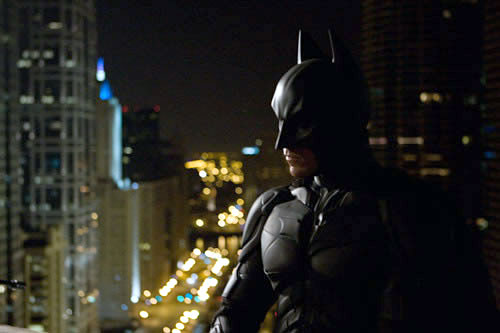
A Bright Day for the Dark Knight


There is a disconnect between Hollywood today and the Hollywood of thirty years ago. Back then, the blockbusters were the award crusaders - films such as Star Wars and Jaws weren't simply summer popcorn fodder, but films that promoted change, entertained, the whole nine yards. Heck. One of those franchises even inspired its own religion. And it doesn't worship giant demonic fish. It would seem that Christopher Nolen found a time machine - because The Dark Knight supremely delivers both.

Over a brooding Gotham City skyline, the dark hero watches a city that has restored to fear and doubt. A lot of sundry men in Joker masks attempt to rob a bank. One by one, they are weeded out by another of their heist group. "You're not needed anymore," they say. "One less share." Only when The Joker enters does the audience see that he is a One Man Act, and that his idea of making writing utensils to disappear is to hide them in men's craniums. Heath Ledger's Joker is not Jack Nicholson's. Ruthless, disturbed, and - oh yes - criminally insane, he makes the average viewer squirm uncomfortably. Are his deeds and actions funny? Certainly not. But seeing a grown man in demonic clown paint and a nurses' uniform brings up a plethora of emotions. And he has this ... thing ... with making sure his victims suffer. "It brings out their true character," says The Joker. Posthumous Oscar nods, anyone?

The film is covered by its overwhelming sense of darkness and doubt. Harvey Dent (Aaron Eckhart) serves as the Beacon of Light in a city where no one knows who will be the next target, the next victim to Drug Lords or Psychosomatic Clowns Gone Awry. Christian Bale's dutiful Batman shines like a ray from the Batlight; the recasting of Maggie Gyllanhaal over Katie Holmes as Rachel Dawes is like Batman choosing his newer, lighter titanium Batsuit. Nowhere in the film are the kitschy references to a comic book, tight spandex costumes, or villains that can be defeated or understood. The Joker uses Gotham as his urban playground, where hubris and human nature collide.

And what of the brooding Batman himself? The guy goes around the entire time playing hero only to realize that Gotham needs someone to look up to, and another to collaborate against, and despise. Guess who's not the White Knight on the shining stallion? It's okay, though, Bat Boy can take the heat.

Seems like there's been some time-travel going on back to the days where Blockbusters are both satisfying and substantial. Go Hollywood. Looks like you've seen the distress signal in the night sky.

Bethertainment Weekly Grade: A
A solid, brooding film that kicks Bat Butt.

Quote of the Day: Harvey Dent: You either die a hero or you live long enough to see yourself become the villain.

Thursday, May 29, 2008

There's No Place Like Home

Today is a watershed day for many.

It marks the last Thursday of the month of May. It marks the anniversary of Edmund Hillary (and his Sherpa from Nepal) reaching the summit of Mt. Everest. Bob Hope was born this day. Wisconsin enters the American Union. And to be added to this vast catalogue of importance, , the season finale of LOST premiers.


I'll admit right now, I am a bit obsessive and - dare I say - fanatical with this show. You would be too after a lingering flu and a lazy Christmas vacation. but I'm not here to justify my noble cause: I'm here to enlighten and engage the general public to what will surely be the defining show of the Second Golden Age of television.

Whoah, sounding a bit too much like a COM class there...

So ... where did we last leave these island cast aways? We've discovered the Oceanic Six, and see their initial arrival to the civilized world once more. But ... there's something that Jack, Kate, Sun, Sayid, (and Aaron, though he can't really talk) aren't saying. What of this fabricated tale, that they were the only survivors, that their survival was one of Lord of the Flies - subsistence on a deserted island. And when any of the five "mix up" a detail, it is of course, due to shock, and not the inaccuracies of their fabrication.

One of the delicious riddles of the show now is how these people manage to get off the island; they are visibly unscathed, relatively un-traumatized, and all at separate points at part one of the "There's No Place Like Home" denouement. Kate and Sayid have been taken by Charles Widmore's people, Jack and Sawyer are again roaming the jungles of the island, Jack fresh from a recent appendectomy and sewn up like a 7th grade home economics project. And Sun? She and her husband Jin have been transported to the freighter to await deployment.

An interesting tidbit from part one of the finale was during the flash-forward. Jack is deposing what happened when the plane (as he says) hit water. "We used cushions, a few life jackets...at that point, there were only eight of us left." Eight, eh? but it's the Oceanic Six. I'm no math major, but some things are not adding up.

And, hallmark to LOST and its' hidden intelligence, this season's finale gives a more than generous nod to various cultural and literary elements. "There's no place like home" of course, is a line from The Wonderful Wizard of Oz, the beloved children's novel by L. Frank Baum. On many occasions, the show salutes these metafictions - that is, stories that open the characters into strange and wonderful worlds they never thought existed. It can be said with Alice when she goes "through the looking glass" (the title of season three's finale) or of Dorothy when she realizes she's not in Kansas anymore. could the writers be insinuating the island is no more than a vivid fabrication - a falsification made for whatever reason to keep the island's inhabitants in a sort of limbo or purgatory until their lesson is learned?

Or maybe they just really really like to freak the viewers out.

Quote of the day: Locke: You guys have electricity? How do you manage that?
Ben: We have two giant hamsters running on a massive wheel in our secret underground cave.

Tuesday, May 27, 2008

A Flurry of Films

This weekend was one of elevated intellect, elevated insight, and elevated blood pressure.

The first two are owed in part to the vast amount of films I watched. The last has to do with the $4.03 I paid per gallon of gas, as well as the promise of seven years indentured servitude and my firstborn child.

America’s national holidays let me savor time that I wouldn't have had originally, and provide a cathartic release to watch all of the films I’ve wanted to watch over the past few years but have made excuse - you know. "Oh, I can't, not tonight, A Shot of Love with Tela Tequila is on ... is she straight? Is she bi? Is she greedy and attention-seeking?" "Not tonight, I have a headache," "..." and so on and so forth. But with little excuse, barring my iTunes library is already too full, I decided, with no time like the present, that this was the weekend to catch up.

I have a friend who won't watch the Oscars unless she has watched all films nominated that year. At least for best picture. I’m not sure how she feels about Foley editing or best-set intern - I’m just talking about the majors.

I’ll start with the one I saw last: there will be blood.

Daniel Day-Lewis plays (incredibly, I might add) the hardened, articulate oil tycoon Daniel Plainview, a man bent on striking deals and finding as much black gold as possible. He claims to be a family man, caring for his prepubescent son, H.W. (whom he adopted, an orphan child of one of his dead workers).

The film follows several decades of Plainview’s life, from humble beginnings in the 1890's where he digs for silver but finds black gold, all the way until the 1920's, where Plainview has evolved, gone to seed, and the years seem to be catching up on him. The humble, concise Paul Sunday (Paul Dano, who plays the identical twin Eli as well) once approaches Plainview in the late 1890's about his family's goat farm, where he believes there is a lucrative market for oil drilling. And thus begins the transformation of the sleepy town of little Boston from religious bastion to industrial behemoth.

The clarity in which Paul Thomas Anderson writes and directs makes this film an instant classic. And let's not talk about DDL - who listened to old turn-of-the-century recordings to adapt the speech patterns of men of the time. And his mustache? Day-Lewis means business. Oil business.

In this sleepy Texas town (which was coincidentally filmed right next to its Oscar contender, no country for old men) we find less of what life is like in 20th century oil country and more of the evolution - or regression - of a man. Plainview reveals to his brother, "I have a competition in me. I want no one else to succeed. I hate most people." you don't get a plainer view on Plainview than that.

I drink your milkshake.

Watch this movie. Now. Or there will be blood.

Tomorrow: If you're lucky (or if I’m up to it) an in-depth review of the season finale of LOST.

Quote of the day: "I drink your milkshake."